
California Families: 1% Bail, Who Qualifies and What It Actually Costs
This guide breaks down qualifications, real costs, timing, and how The Bail Network structures these plans for California families.
TL;DR:
- The 1% down payment is only a starting fee; the full premium remains legally owed and is typically around 10% of the bail amount.
- Qualifying for a 1% bail bond usually requires approved credit, a local cosigner, and valid identification, with some cases offering no money down options.
- The speed of release depends on jail processing times, which can take from nearly instant to several hours, especially if documents are prepared in advance.
- Cosigners are legally responsible for the entire bail amount if the defendant skips court, and collateral can be seized to cover unpaid fines or fees.
- Confirm all terms in writing before signing, as financing plans may include interest, late fees, and additional costs beyond the initial 1% payment.
Table of Contents
- What Does a 1% Bail Offer Actually Mean?
- How Does a 1% Down Bail Arrangement Work?
- Who Qualifies for a 1% Bail Bond?
- What’s the Full Cost Behind a 1% Bail Plan?
- How Fast Does a 1% Bail Bond Get Someone Released?
- What Are Cosigner Responsibilities and Legal Risks?
- Are 1% Bail Offers Worth It, or a Red Flag?
- How The Bail Network Supports Californians Seeking 1% Bail
- A Straight Answer From Someone Who Watches This Process Daily
- Get 1% Bail Bond Help From The Bail Network Now
- Where to Verify Bail Premium Rules
- Sources
- FAQ
What Does a 1% Bail Offer Actually Mean?
The bondsman still charges the standard premium, typically a filed rate of 10% in California, but lets you put down just 1% up front while the rest is paid over time under a signed contract.
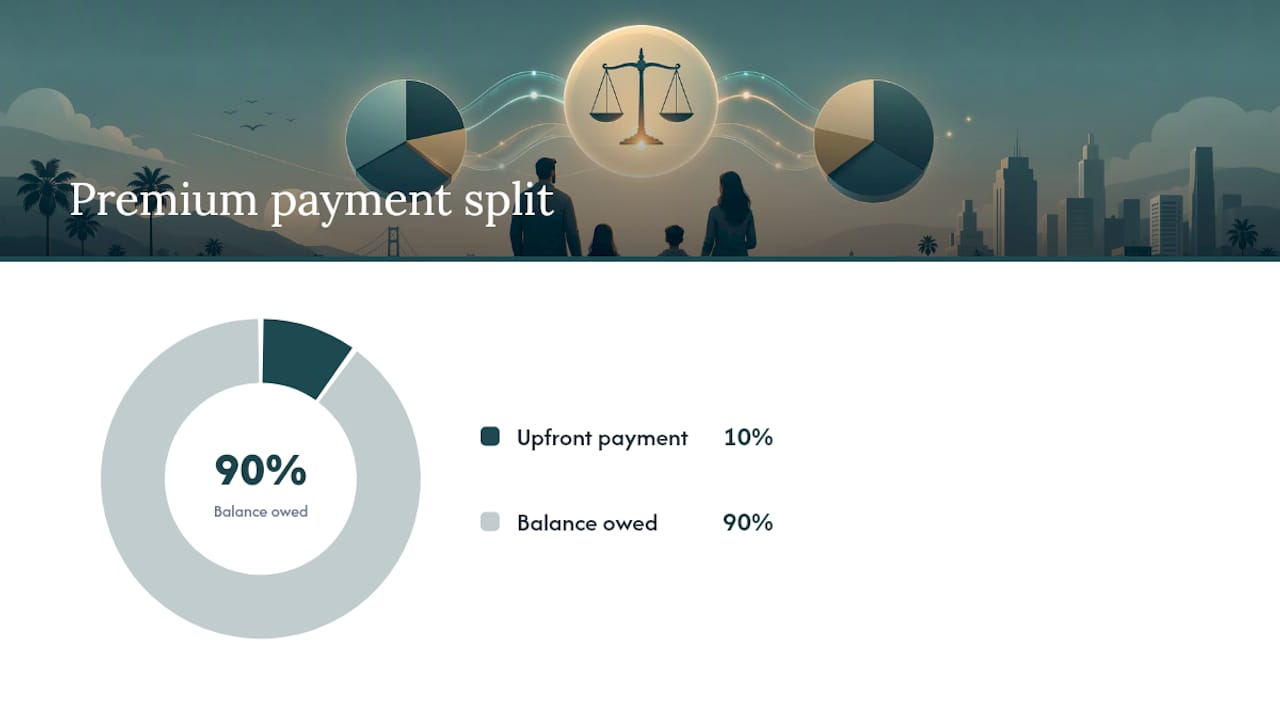
Here’s the math on a $50,000 bail case. The full premium at 10% would be $5,000. Marketing language around 1% bail commonly hides a larger premium behind the down payment framing, which is exactly why reading the contract line by line matters before you sign anything.
A few things to keep straight before you call an agent:
- The 1% is a starting payment, not the final bill.
- The remaining premium is still legally owed under the bail contract.
- “1% bail” is a financing term, not a reduced legal fee.
How Does a 1% Down Bail Arrangement Work?
The process runs on a fairly predictable sequence, whether you’re calling at noon or 3 a.m.
- Contact a licensed bail agent and give them the defendant’s name, booking number, and county of arrest.
- Provide basic qualifying information, including your ID, income details, and a cosigner if one is needed.
- Review and sign the indemnity agreement. This is the contract that legally binds you (the indemnitor) to guarantee the full bail amount if the defendant misses court.
- Pay the 1% down payment to activate the bond and begin release processing.
- The surety company posts the bond with the court, and the agent coordinates with the jail for release.
- You start the remaining payment plan, typically in scheduled installments until the full premium is paid off.
The indemnity contract is the part people skip over, and it’s the part that matters most. The surety company backs the bond financially, but the cosigner carries the legal and financial exposure if things go wrong.
Pro Tip: *Have your ID, proof of address, and cosigner’s contact information ready before you call.
Who Qualifies for a 1% Bail Bond?
Agents check a handful of things before they’ll extend that kind of financing, because they’re essentially fronting the balance of your premium.
Common qualifying factors include:
- Approved credit or an established ability to make ongoing payments
- A cosigner with steady income or local ties
- Residency or a verifiable local address in California
- The type of offense (violent or high-risk cases may not qualify for the lowest down payment tiers)
Documents agents typically ask for:
- A valid photo ID
- Proof of relationship to the defendant (for cosigners)
- Proof of income or employment
- A current address, sometimes with a utility bill or lease
Some agents offer 2% bail bonds with approved credit as a middle tier, and others structure no money down bail bonds for cases where collateral substitutes for a cash down payment.
What’s the Full Cost Behind a 1% Bail Plan?
The word “premium” refers to the fee you pay a bail agent for posting your bond, and it’s generally nonrefundable once the bond is posted, regardless of how the case turns out. That’s different from cash bail paid directly to the court, which is refundable if the defendant meets all court obligations.
California runs on a filed-rate system, meaning bondsmen file their premium schedule with the state and can’t charge above or arbitrarily below it. The rate is commonly 10%, plus certain permitted itemized expenses like travel or paperwork fees in specific circumstances.
By the numbers: On a $20,000 bond, the total premium owed is typically around 10% of the bond amount. A 1% down plan means a small initial payment upfront, with the remaining balance spread across a payment schedule, plus any allowable itemized costs disclosed in the contract.
Typical payment plans stretch the remaining balance over several months, with installment amounts set in the indemnity agreement. Ask specifically whether your plan includes interest, service charges, or late fees, since terms vary by agent and are worth confirming before signing.
How Fast Does a 1% Bail Bond Get Someone Released?
Release timing depends more on the jail than the bail company. Processing can range from nearly immediate to several hours, depending on booking backlogs, paperwork accuracy, and how quickly you supply required documents.
Steps that genuinely speed things up:
- Have your cosigner’s information and ID ready before calling.
- Complete any online intake paperwork the agency offers in advance.
- Call an agent who works 24/7, since after-hours booking delays are common and early contact avoids queue backups.
- Confirm the down payment method (card, cash, or electronic transfer) so there’s no back-and-forth once the agent is ready to post.
After release, expect the agent to review your court date, set reminders, and confirm your payment schedule for the remaining premium. Missing a scheduled payment can trigger contract penalties separate from any court issue, so treat the payment plan with the same seriousness as the court date itself.
What Are Cosigner Responsibilities and Legal Risks?
Signing as a cosigner (also called an indemnitor) makes you financially and legally responsible for the full bail amount, not just your share of the down payment. If the defendant skips a court date, the bond is forfeited, and the bail company can pursue the cosigner for the full remaining balance, plus recovery costs in some cases.

Collateral, if pledged, is also at risk. Property, vehicles, or other assets used to secure a bond can be seized if the defendant fails to appear and the debt goes unpaid.
Protections worth requesting before you sign:
- A written, itemized list of exactly what collateral secures the bond
- Clear payment receipts for every installment
- A written cap on additional fees beyond the disclosed premium
- A copy of the fully signed indemnity agreement for your own records
Pro Tip: Read the cosigner’s role and obligations section of your contract out loud before signing. Hearing the terms spoken tends to catch vague language that’s easy to skim past on paper.
Are 1% Bail Offers Worth It, or a Red Flag?
It gets a qualified applicant out faster and spreads the financial burden without requiring the family to liquidate savings on day one.
The pitfalls show up in the marketing, not the math. Ads that imply “1%” is the entire fee are misleading, and agents operating in states with filed-rate rules can’t legally charge less than the filed premium, only structure how you pay it.
Questions worth asking any agent before you sign anything:
- Is this 1% a down payment on the full premium, or the total fee?
- What is the filed premium rate for this bond in California?
- Are there additional itemized expenses beyond the premium?
- What happens to my down payment if I can’t complete the payment plan?
How The Bail Network Supports Californians Seeking 1% Bail
Thebailnetwork offers 1% bail bonds in California with approved credit, backed by bilingual agents available 24/7 across Southern California. That around-the-clock access matters most in the exact moment families need it: a 2 a.m. arrest doesn’t wait for business hours.
Beyond the payment structure itself, Thebailnetwork provides inmate-locator support to help families find a loved one quickly, along with educational resources on how bail payments work so clients understand every term before they sign. For qualifying cases, the 1% service page is the right first stop; for broader questions about a specific case type or state rules, the general posting bail fees resources page covers the regulatory context.
A Straight Answer From Someone Who Watches This Process Daily
The families who come out of this the best are the ones who ask for written terms before they hand over a dollar. Speed matters in this business, but so does making sure the person on the other end of the call is being straight with you about what you’ll owe six months from now.
— Jake
Get 1% Bail Bond Help From The Bail Network Now
Thebailnetwork’s advantage for Southern California families isn’t just low cost, it’s speed paired with honesty about what you’re actually signing. Where other financing offers bury the real premium in fine print, Thebailnetwork’s 1% bail bonds in California come with bilingual agents who walk you through the filed rate, the payment schedule, and every itemized cost before you commit to anything.
If you need release started right now, Thebailnetwork’s agents are reachable 24/7 for immediate assistance, and the main service page outlines the full range of payment options, including 2% and no-money-down alternatives, if a 1% plan doesn’t fit your situation. Call, gather your ID and cosigner details, and ask for the written terms on the spot. That’s the fastest, safest way to move from arrest to release without surprises down the line.
Where to Verify Bail Premium Rules
- Real Cost Report’s bail bond cost breakdown explains how the 10% premium standard varies by state.
- AboutBail’s cost guide covers California’s filed-rate system and permitted expenses.
- Lempu’s state-by-state bail calculator shows how premium regimes differ across the country.
This article is general information, not a substitute for advice from a qualified lawyer. Consult a qualified legal professional about your own circumstances before acting on anything here.
Sources
- What Are 1 Percent Bail Bonds in 2026? Understanding the Facts | Express Bail Bonds
- Bail Bond Costs 2026: How the 10% Fee Actually Works and What You’ll Pay - Real Cost Report
- Aboutbail
- How Much Does Bail Bond Cost? (2026 Guide) | CostWhale
- Bail Bond Calculator | Bond Cost by State | Lempu
FAQ
What Is the Lowest Percentage for Bail Bonds?
The full premium, commonly 10% under California’s filed-rate system, is still owed through the payment plan.
What Does $1 Bail Mean?
“$1 bail” typically refers to a court setting an extremely low bail amount for minor charges, not a financing offer from a bail agent.
Where Can I Find 1% Bail Bonds in San Diego?
Thebailnetwork offers 1% bail bonds in California with approved credit, supported by bilingual agents available 24/7 throughout Southern California, including San Diego. Current pricing and qualification details are available directly on the service page.
Why Do You Only Pay 10% on Bail?
The 10% figure represents the standard premium many bail agents charge under state filed-rate systems, rather than paying the full bail amount to the court yourself. This premium is generally nonrefundable once the bond is posted, unlike cash bail paid directly to the court, which can be refunded if the defendant meets all court obligations.