
Families: How to Bail Someone Out Fast, Timelines and the 10–15% Fee
You can usually get someone released fastest by paying the full cash amount at the jail or hiring a licensed bail bondsman. Cash is refundable but ties up your money until the case ends; a bondsman charges a nonrefundable fee, often 10 to 15% of the bail, in exchange for immediate help and lower upfront cost. Either way, whoever signs takes on real legal responsibility if the defendant skips court.
TL;DR:
- Bail bonds typically cost 10 to 15% of the bail amount and are nonrefundable, making them more expensive upfront but faster than paying full cash.
- Confirm the inmate’s custody status, bail amount, and acceptable payment methods with the jail before leaving home to avoid delays and wasted trips.
- The posting process can take hours due to facility procedures, shift changes, and paperwork, even if payment is completed quickly.
- Bail becomes forfeited if the defendant misses court, but recovering funds requires strict court deadlines and proper documentation.
- Trustworthy bondsmen should verify licensing, provide written contracts, and avoid high-pressure tactics or payments outside official channels.
Table of Contents
- What To Do The Moment You Get The Call
- What Are Your Bail Options?
- How Do You Actually Post Bail?
- What Will It Actually Cost You?
- What Are You Actually Signing Up For As A Cosigner?
- How Long Does The Whole Process Actually Take?
- When Do You Get Your Money Back, And When Do You Lose It?
- How Do You Pick A Bondsman You Can Actually Trust?
- Our Take On Getting Someone Out Fast
- Get Help Posting Bail Tonight
- Where To Check Local Rules Before You Show Up
- Sources
What To Do The Moment You Get The Call
The first twenty minutes after that phone call decide how fast everything else moves. Jails run on their own clock, and showing up without the right information just adds hours to a night that already feels long enough.
Work through these steps in order:
- Write down the essentials. Get the person’s full legal name, date of birth, the booking facility’s name, the booking or case number, and the charges filed against them.
- Confirm the bail amount and status. Call the jail directly or use its inmate locator system to verify the person is actually in custody and whether bail has been set yet. Some jurisdictions set bail off a standard schedule within hours; others require a judge to set it at a hearing.
- Choose your payment path. Decide whether you’re paying the full cash amount yourself or working with a bail bondsman, then gather a valid photo ID, your payment method, and information for anyone who might cosign.
- Call an attorney if there’s any doubt. If the charges are serious, bail may be denied or set unusually high, and a lawyer can request a bail hearing or argue for a lower amount.
- Get your documents in order before you drive anywhere. Facilities frequently reject payments over a technicality, like an expired ID or a personal check when only money orders are accepted.
Pro Tip: Call the jail before you leave the house. Ask exactly what forms of payment they’ll accept and whether the person is even eligible for bail. That one phone call saves more wasted trips than anything else on this list.
What Are Your Bail Options?
Courts generally recognize four primary methods to secure someone’s release, and each one fits a different financial situation. Understanding how these release methods work before you commit to one can save you thousands of dollars or weeks of hassle.
- Cash bail. You pay the full amount directly to the court or jail. If the defendant shows up to every court date, the court returns the money once the case closes, though some jurisdictions deduct administrative fees first.
- Surety bond (bail bondsman). A licensed bondsman posts the full bail on the defendant’s behalf. You pay the bondsman a fee, usually a percentage of the total, and that fee is gone regardless of the case outcome.
- Property bond. You pledge real estate, usually with equity well above the bail amount, as collateral instead of cash. Courts often require an appraisal and a lien filing, which can take days rather than hours.
- Release on own recognizance (OR). The judge releases the defendant on a written promise to appear, with no money changing hands. Judges typically consider community ties, criminal history, and flight risk before granting this.
Bail bond fees typically run 10 to 15% of the total bail amount, and that fee is nonrefundable no matter how the case ends. A $10,000 bail, for example, might cost $1,000 to $1,500 as a bondsman’s fee, compared to the full $10,000 if you pay cash, which you’d eventually get back.
Own recognizance isn’t something you request for someone else. It’s a judge’s call, based largely on the defendant’s ties to the community, employment, and whether they’ve missed court before.
How Do You Actually Post Bail?
Where and how you pay depends entirely on the path you picked. Jails typically list several accepted methods, and mixing them up is one of the most common reasons families lose hours they didn’t need to lose.
- In person at the jail or courthouse. Most facilities accept cash, money orders, or cashier’s checks at a booking or release window; personal checks are almost never accepted for obvious reasons.
- Electronic transfer. Some counties allow payment through services like Western Union, but these transfers can add real delay to processing compared to paying in person.
- Through a bail bondsman. You sign a contract, provide ID, and in most cases either a cosigner or collateral. The bondsman then submits the bond to the jail electronically or in person, which usually moves faster than a cash transfer.
If you go the bondsman route, expect the transaction itself to take 20 to 40 minutes: paperwork, a credit or collateral check, and signatures. The bondsman handles the actual filing with the jail after that.
Pro Tip: After payment, call the jail’s booking desk and ask them to confirm they’ve received it and logged the release order. Don’t just assume the payment “went through” because a receipt printed. Confirm the release order specifically.
What Will It Actually Cost You?
The dollar figure depends entirely on which method you choose, and the differences are bigger than most people expect walking in.
- Cash bail gets refunded in full once the case concludes and the defendant made every court appearance, though courts sometimes subtract administrative or court fees from the refund.
- Bondsman fees run 10 to 15% of the total bail and are gone the moment the bond is posted, win or lose in court.
- Payment plans through a bondsman can spread that fee over months, which matters when the alternative is coming up with several thousand dollars overnight.
Here’s how that plays out at different bail amounts:
At $50,000, most families simply don’t have that much cash sitting around, which is exactly why bondsmen exist and why payment plan options matter so much in practice.
What Are You Actually Signing Up For As A Cosigner?
Cosigning a bail bond isn’t a favor with no strings attached. It’s a legal contract that makes you financially responsible if things go wrong, and too many people sign without reading what they’re agreeing to.
- You’re liable for the full bail amount if the defendant fails to appear, not just the fee you already paid the bondsman.
- Bondsmen can pursue collateral or file collection suits against you to recover their losses, since cosigners assume that legal and financial exposure directly.
- The defendant faces separate criminal exposure, including a new bail-jumping charge and a bench warrant, on top of whatever they were already facing.
- Read the promissory note before you sign anything. Ask specifically what happens to your collateral, what recovery methods the bondsman uses, and get every term in writing.
Pro Tip: If a bondsman won’t put their recovery policy in writing before you sign, that’s your answer. Walk away and find one who will. You can read more about how missed court dates affect the bond and what your specific liability looks like before you commit.
How Long Does The Whole Process Actually Take?
Booking typically takes 2 to 6 hours after arrest, and most jurisdictions require a bail hearing within 48 to 72 hours if bail wasn’t already set by a standard schedule. Posting bail doesn’t mean instant release, either.
- Release processing after payment often takes 2 to 8 hours, even after the bond is fully posted and confirmed.
- Many jails observe blackout windows, commonly around shift changes or meal times, when no releases happen at all, regardless of how early you paid.
- While you wait, call the jail’s booking clerk to confirm your payment posted, and keep your bondsman or attorney’s number handy in case something stalls.
Facility scheduling, not the payment itself, is usually what eats the most time. Headcounts and shift transitions can add hours even after everything on your end is done. If you’re trying to post bail at night, expect the wait to run longer, since many facilities run reduced staff after hours.
When Do You Get Your Money Back, And When Do You Lose It?
Courts return cash bail once the case ends and the defendant attended every required court date, minus any administrative fees the jurisdiction deducts. Bail forfeiture works very differently.
- Bail gets forfeited when the defendant fails to appear or violates specific bond conditions set by the court.
- Once forfeited, recovering the funds usually requires filing a motion with the court and showing valid evidence for the absence, like a medical emergency or documented miscommunication about the court date.
- Courts set strict windows for these motions. Missing that deadline typically means the money is gone for good.
How Do You Pick A Bondsman You Can Actually Trust?
Not every bondsman runs an honest operation, and the wrong choice can cost you far more than the fee itself.
- Verify the license. Ask for their license number and check it against your state’s regulatory database before handing over any money.
- Ask direct questions. What’s the exact fee percentage? Are payment plans available? What collateral is required? What’s their process if the defendant misses court?
- Get everything in writing. A reputable bondsman puts fees, collateral terms, and recovery procedures in a signed contract, not a verbal promise.
- Watch for red flags. High pressure tactics, refusal to provide a written contract, or requests to pay outside official channels are signs to walk away immediately.
Our Take On Getting Someone Out Fast
Most guides treat bail like a math problem: pick the cheapest option and move on. That’s backwards. The real question isn’t which option costs less on paper, it’s which one gets your family member out fastest without putting you in a legal or financial hole six months from now.
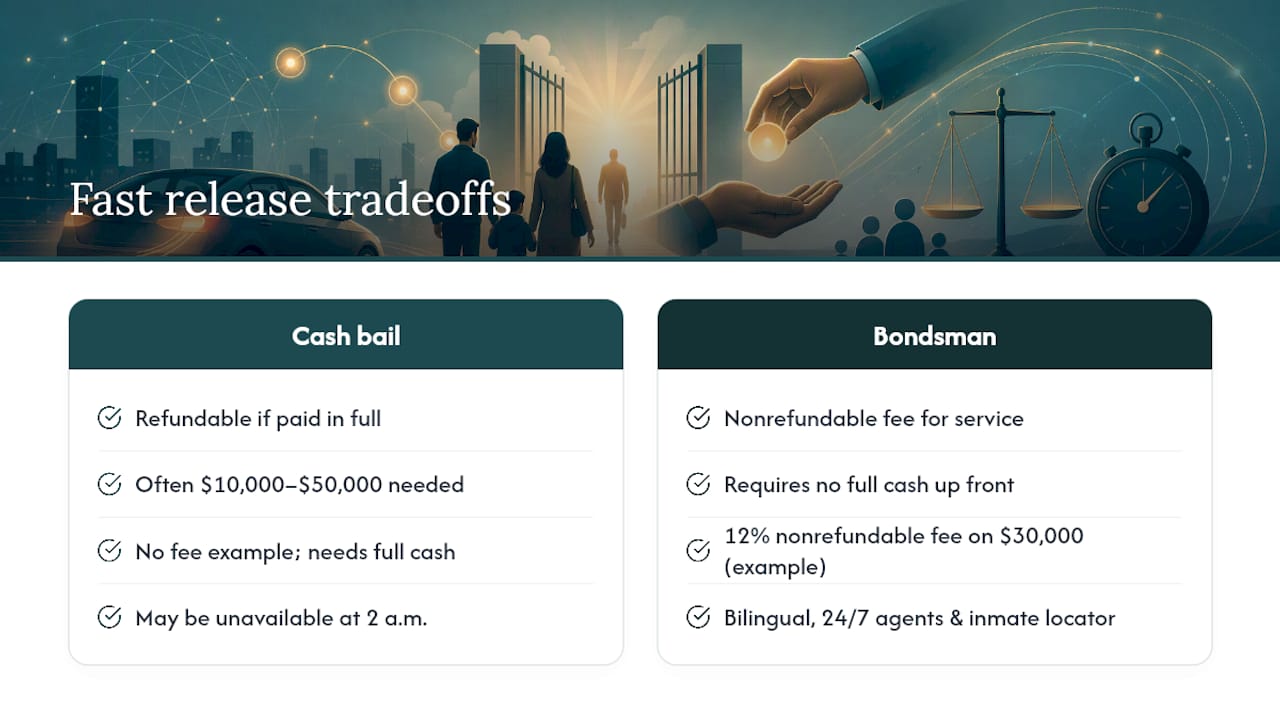
Cash bail looks appealing because it’s refundable, but most families don’t have $10,000 or $50,000 sitting in a checking account at 2 a.m. That’s the entire reason bondsmen exist, and it’s why the fee structure gets criticized unfairly. A 12% nonrefundable fee on a $30,000 bond sounds steep until you compare it to the alternative: leaving someone in custody for days while you scramble for cash you don’t have.
Bilingual, 24/7 agents and inmate locator support exist because emergencies don’t wait for business hours, and neither should your options. They can make the difference between posting bail promptly or experiencing delays.
— Jake
Get Help Posting Bail Tonight
Some bail services aim to provide answers faster than driving to the jail and hoping someone at the counter has time to explain your options. Bilingual agents may work 24/7 in some regions, offering consistent responses regardless of the time of day.
Before you call, have the defendant’s full name, the booking facility, and the bail amount ready if you already know it. Our agents can look up the rest and walk you through how bail bond payments actually work, including whether you qualify for a payment plan as low as 1% with approved credit instead of paying the full fee upfront. Most calls result in an agent starting paperwork within minutes, not hours. Visit Thebailnetwork now or call the number listed there to get someone moving on your case tonight.
Where To Check Local Rules Before You Show Up
Every county runs its own release procedures and payment rules, so confirm details directly with the facility clerk before you drive over.
- Check your county jail’s official bonding page for accepted payment methods and posted release windows.
- Review your state’s bail statutes for exact timelines and hearing requirements.
- If cost is the barrier, nonprofit programs like The Bail Project offer bail assistance in select jurisdictions.
This article is general information, not a substitute for advice from a qualified lawyer. Consult a qualified legal professional about your own circumstances before acting on anything here.
Sources
- Understanding Kentucky bond and pretrial release | Baldani Law
- Bail, Bonds, and Relevant Legal Concerns | Criminal Law Center | Justia
- Bonding Out | Orange County Florida
- How Bail Bonds Work: Complete Guide to the Bail Process | SpeedyBail