
Families, Get Someone Home: Bail vs Bond and the 15% Premium
Bail is the amount of money a court sets to release a defendant before trial; a bond is a promise, usually backed by a bail bonds company, that pays that amount on the defendant’s behalf for a nonrefundable fee. Pay bail yourself and you get it back after the case wraps up, minus possible fees. Pay a premium for a bond and that money is not refunded, regardless of the outcome.
TL;DR:
- Paying cash bail refunds the full amount if court obligations are met, but any administrative fees may reduce the refund in some jurisdictions.
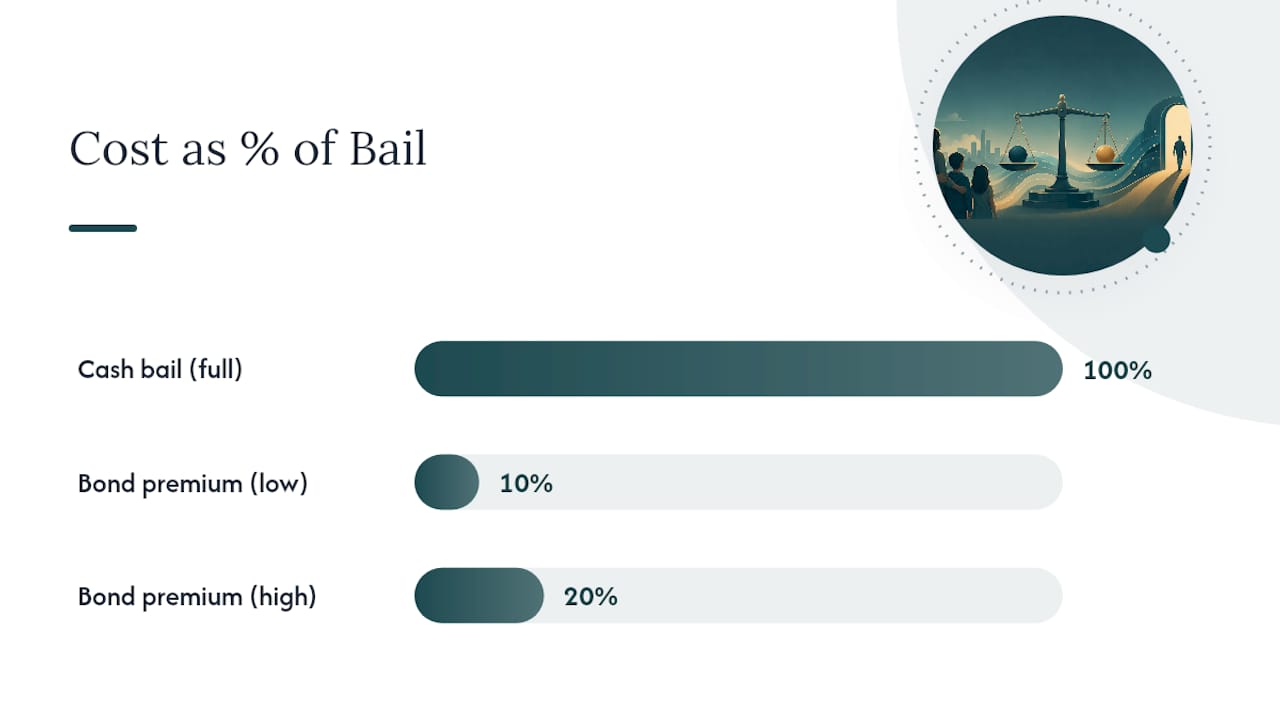
- Bail bonds involve paying a nonrefundable premium typically between 10% and 20% of the bail amount, which is never returned regardless of case outcomes.
- Bonds may require collateral such as property or valuables, which can be seized if the defendant misses court or defaults on the bond.
- If a court date is missed, cash bail is forfeited directly to the court, while bonds can lead to collateral seizure or the hiring of recovery agents to locate the defendant.
- State laws vary widely; some jurisdictions restrict or ban commercial bail bonds, affecting available options for families trying to secure release.
Table of Contents
- Bail vs Bond: What Cash Bail Actually Means
- What Is a Bail Bond, and How Does It Work?
- Cash Bail vs Bond: A Side-by-Side Look
- How to Get Someone Released After an Arrest
- What Does Bail and a Bond Really Cost You?
- The Risks Families Should Know About Before Signing
- A Note From The Bail Network
- Get Help Posting Bail Right Now
- Sources
Bail vs Bond: What Cash Bail Actually Means
Cash bail is straightforward: the court sets a dollar amount, and the defendant or their family pays it directly to the court in full. Attend every required hearing, and that money comes back at the end of the case, though some jurisdictions subtract administrative fees before issuing the refund.
Some states also allow a deposit bond, where you pay a percentage (often 10%) directly to the court instead of the full amount. It works like a hybrid between cash bail and a commercial bond, and where it’s available, it can beat a bondsman’s premium on price.
Judges don’t pick bail amounts arbitrarily. They weigh a handful of consistent factors:
- Flight risk: how likely the person is to skip court
- Severity of the alleged offense
- Prior criminal record or history of missed court dates
- Ties to the community, like a job, family, or local housing
The Eighth Amendment bars excessive bail, and courts are supposed to treat it as a tool to guarantee someone shows up, not a punishment handed down before trial.
What Is a Bail Bond, and How Does It Work?
A bail bond brings in a third party, usually a licensed bail bond agent, who guarantees the full bail amount to the court. In exchange, the defendant or their family pays that agent a nonrefundable premium, typically between ten and twenty percent of the total bail.
That premium isn’t a down payment. It’s a service fee, and you don’t get any of it back even if every charge is later dropped. Bond agents often require collateral, like a car title, jewelry, or a lien on a house, to cover their exposure if the defendant disappears. A co-signer who agrees to the bond takes on legal responsibility for that debt too.
Not every bond looks the same:
- Surety (commercial) bonds: a licensed company posts bail for a fee, the most common setup
- Unsecured bonds: the defendant is released without paying up front but owes the full amount if they miss court
- Property bonds: real estate serves as collateral instead of cash
Bond rules vary by state, and some states restrict or ban commercial sureties entirely, so what’s available where you live depends heavily on local law.
Cash Bail vs Bond: A Side-by-Side Look
Here’s the difference between bail and bond boiled down to the four things that actually matter to a family trying to get someone home.
| Factor | Cash bail | Bail bond |
|---|---|---|
| Who pays | Defendant or family, in full | Bond company posts full amount; family pays a premium |
| Refund | Full amount refunded if court dates are kept | Premium is never refunded |
| Typical cost | full amount of set bail | 10% to 20% of set bail |
| Missed court (FTA) | Full bail forfeited to the court | Bondsman may seize collateral or pursue the defendant |
The forfeiture risk is where things get serious. Skip a court date on cash bail and the court simply keeps the money. Skip it on a bond and the bondsman can go after your collateral, and in some states, hire a recovery agent to track the defendant down.
How to Get Someone Released After an Arrest
Getting someone out of jail follows a predictable sequence, even though the exact timing shifts by county and by how busy the jail is that night.
- Booking happens first. The person is fingerprinted, photographed, and their information is entered into the system.
- A judge or magistrate sets bail, either at a scheduled arraignment or, for many offenses, off a preset bail schedule within hours of booking.
- You learn the release options, which usually include paying cash bail, using a bond, release on recognizance for low-level or first-time cases, or in rare cases, no release at all.
- You gather the essentials: the defendant’s full name, booking number, the arresting agency, and the exact bail amount.
- You decide how to pay, then contact a bondsman if you’re going that route.
- Paperwork gets signed, collateral or a premium changes hands, and the jail processes release, which can take anywhere from a couple of hours to most of a day depending on staffing.
Pro Tip: Call the jail’s booking desk or an agent before you drive anywhere. Confirming the bail amount and any special conditions by phone saves you a wasted trip and speeds up everything that follows.
What Does Bail and a Bond Really Cost You?
The dollar difference between these two paths is bigger than most people expect. On a $10,000 bail, paying cash means you eventually see all $10,000 again. Paying a 15% premium through a bondsman means you hand over $1,500 and never see it again, no matter what happens in court.
| Scenario | You pay | You get back |
|---|---|---|
| Cash bail, $10,000 set | $10,000 upfront | Up to $10,000 (minus fees in some states) |
| Bond, $10,000 set, 15% premium | $1,500 upfront | premium is nonrefundable |
Collateral is a separate question from the premium. Cars, homes, and other valuables pledged against a bond typically get released once the case closes and the bondsman’s obligation ends, but they’re at risk the entire time the case is open. If you’re unsure what happens to a deposit after sentencing, refund rules for bail bonds vary enough by company and state that it’s worth checking before you sign anything.
The Risks Families Should Know About Before Signing
Missing a court date triggers consequences on both sides of this decision, and neither is gentle.
- On cash bail, the court forfeits the entire amount and issues a warrant.
- On a bond, the bondsman can seize pledged collateral, and in some states, dispatch a recovery agent to locate the defendant.
- Co-signers are legally on the hook for the full bond amount if the defendant vanishes, not just the premium.
- Some states have restricted or banned commercial bail bonds altogether as part of broader bail reform efforts, which changes what options are even on the table.
Before signing a bond agreement, ask exactly what collateral is being pledged, get everything in writing, and confirm what happens if a court date gets moved instead of missed outright.
A Note From The Bail Network
We built our approach around one fact: nobody calls a bail bondsman on a good day. Our team keeps bilingual agents on call around the clock, with payment plans designed to ease the financial hit during an already stressful stretch. Before you call anyone, jot down the inmate’s name, booking number, and bail amount. It shaves real time off the process, and our educational pages walk through the details step by step.
— Jake
Get Help Posting Bail Right Now
Reading through the mechanics of bail and bonds is useful, but at 2 AM with a booking number in hand, you need a working number more than a definition. Thebailnetwork keeps bilingual agents available 24/7 across Southern California, with payment plans starting as low as 1% for those who qualify with approved credit, so the upfront cost doesn’t add to an already rough night.
Before you call, have three things ready: the defendant’s full name, their booking number, and the bail amount set by the court. That’s it. Our team takes it from there. If you want to see how financing actually breaks down before you commit, how payment plans work lays it out in plain terms, or you can go straight to Thebailnetwork’s main page to start the release process now.
This article is general information, not a substitute for advice from a qualified lawyer. Consult a qualified legal professional about your own circumstances before acting on anything here.
Sources
- New York State Department of Financial Services — Consumer guide to bail
- Legal Information Institute — Bail
- University of Washington School of Law — Bail and bail bondsman (2025)
- National Conference of State Legislatures — Pretrial release and bond types