
Families: 5 Steps to Get Your Bail Money Back After Charges Drop
If you paid cash directly to the court, you usually get it back once the court formally exonerates the bond, minus any court costs or fines the judge orders deducted. If you paid a bail agent’s premium, that money is gone for good regardless of how the case ends. Before anything else, confirm the court has actually entered an exoneration or bond release order. That single document is the trigger for every refund that follows.
TL;DR:
- Refunds for cash bonds are issued after the court formally exonerates the bond, but only if the exoneration order and case dismissal are properly documented.
- Premium paid to a bail agent is nonrefundable, and collateral pledged to secure the bond is only released after the exoneration is processed and recorded.
- Court dismissals with prejudice do not automatically trigger bond exoneration, making it essential to confirm the actual exoneration order before requesting a refund.
- Refunds may be delayed by statutory hold periods or administrative processing, which vary by state and often take several weeks after exoneration.
- Bail can be forfeited if the defendant misses court dates, and courts deduct outstanding fines or costs from refunds before releasing remaining funds.
Table of Contents
- Charges Dropped and Bail: Cash Bonds vs. Surety Bonds
- What Happens Legally When a Case Is Dismissed?
- How Long Does a Bail Refund Actually Take?
- When Bail Isn’t Returned: Forfeiture and Deductions
- Property Bonds: Getting a Lien Released After Exoneration
- Your Step-by-Step Checklist to Recover Bail Money
- An Agent’s Take: Common Mistakes That Cost Families Money
- Where the Standard Advice on Bail Refunds Falls Short
- How The Bail Network Handles Posting, Paperwork, and Payoffs
- Where to Verify Local Bail Refund Rules
- Sources
- FAQ
Charges Dropped and Bail: Cash Bonds vs. Surety Bonds
The refund question always comes back to one thing: how the bail was posted in the first place. Courts treat cash and bail bonds as completely different financial arrangements, even when they secure release on the exact same charge.
A cash bond means someone deposited the full bail amount, in cash or certified funds, directly with the court clerk. Post $50,000 in cash, and once the case ends favorably and the court exonerates the bond, that $50,000 (minus deductions) comes back to whoever paid it.
A surety bond, commonly called a bail bond, works differently. A licensed bail agent posts the full bail amount on the defendant’s behalf, and the family pays the agent a premium, typically a percentage of the bail amount as regulated by the state. On that same $50,000 bail, the premium is a fee paid to the agent for taking on the financial risk, and it does not come back even if charges are dropped the next morning.
- Cash bond: full amount refundable after exoneration, less deductions.
- Surety bond premium: nonrefundable, no matter the case outcome.
- Collateral pledged to a bail agent (a car title, jewelry, property) is different from the premium. It secures the agent against loss and gets released once the bond is exonerated, assuming the indemnity contract’s terms were met.
Pro Tip: Read your indemnity agreement before you sign it, not after you’re trying to get collateral back. It spells out exactly when and how collateral gets released, and most disputes trace back to someone skipping that page.
What Happens Legally When a Case Is Dismissed?
A dismissal is not always the end of the story, and that matters more than most people realize when bail money is involved. Courts and prosecutors use several terms, and the wording changes what happens next.
A dismissal “without prejudice” leaves the door open. The prosecutor can refile the same charges later, often before a statute of limitations runs out. A dismissal “with prejudice” closes that door permanently on those specific charges. A nolle prosequi, meanwhile, is the prosecutor’s own decision to drop the case, and whether it blocks a refile depends on timing and local court rules, not a fixed nationwide standard.
None of these outcomes automatically releases the bond. A judge or the court clerk still has to enter a formal exoneration order before the bail system treats the case as closed for refund purposes.
- Ask the clerk directly whether the dismissal order has triggered a bond exoneration, or whether that’s a separate filing.
- Request certified copies of both the dismissal order and the exoneration order. Photocopies from a courthouse printer often are not accepted for refund processing.
- Keep those documents with your original bail receipt. You will likely need all three together.
How Long Does a Bail Refund Actually Take?
Refunds rarely arrive the same week charges get dropped, and the reasons are mostly administrative rather than punitive.
Some states build in a mandatory waiting period before releasing funds, specifically to guard against a quick re-arrest on a related charge. California, for example, has a statutory hold of a fixed period after dismissal before the refund process can move forward. That window exists to protect the court against paying out money on a case that gets refiled almost immediately.
- Confirm the exoneration order is entered. Nothing else starts until this happens.
- Wait out any statutory hold period your state imposes, if one applies.
- Allow standard clerk processing time, which varies by county and caseload, often several weeks once the hold clears.
- Expect a longer timeline for surety collateral, since that involves the bail agent’s own internal release process on top of the court’s.
Update your mailing address with the clerk’s office the moment it changes. A refund check mailed to an old address is one of the most common, and most avoidable, causes of a “lost” refund.
When Bail Isn’t Returned: Forfeiture and Deductions
Bail is not a deposit on innocence. It’s a guarantee that the defendant shows up to every required hearing, and courts enforce that guarantee even after charges are dropped.
Missing a required court date can trigger bond forfeiture, meaning the court claims the bail money regardless of what happens to the underlying charges. Depositors and sureties typically get a statutory window, often measured in months, to either produce the defendant or ask the court to vacate the forfeiture. Miss that window, and the money is gone even if the case is later dismissed entirely.
Even when a case ends well, courts commonly deduct:
- Outstanding court costs or administrative fees.
- Unpaid fines from the same case.
- Restitution ordered as part of a plea or judgment.
- In some jurisdictions, unrelated outstanding obligations the defendant owes the court.
Pro Tip: Never accept a refund check that’s smaller than expected without asking why. Courts must be able to explain every deduction, and an itemized accounting will show exactly where the difference went.
Property Bonds: Getting a Lien Released After Exoneration
Pledging real estate instead of cash or a bail agent’s premium adds an extra layer most people don’t expect. The court or bail company records a lien, sometimes structured as a deed of trust, against the property when the bond is posted.
Once the court exonerates the bond, that lien doesn’t disappear automatically. Someone has to file a reconveyance or lien release with the county recorder’s office, a separate step from anything the court clerk handles.
- Request the recorded release document from the bail company or court once exoneration is confirmed.
- File it with the same county recorder’s office where the original lien was recorded.
- Budget extra time, often several additional weeks beyond the cash refund timeline, and expect small recording fees in most counties.
Your Step-by-Step Checklist to Recover Bail Money
Getting bail money back rarely happens automatically. Treat it like any other paperwork process where you’re the one who has to push it forward.
- Confirm the case disposition and get the exoneration order. Call or visit the clerk’s office and ask specifically whether the bond has been exonerated, not just whether the case was dismissed.
- Bring your paperwork to the court cashier. You’ll typically need the case number, your original bail receipt, and photo identification. Ask for a written, itemized refund accounting before you leave.
- If a bail agent posted the bond, contact them directly about collateral release. Pull out your indemnity agreement and check exactly what it says about timing and conditions.
- Watch for a mismatched refund amount. If the check is short and the accounting doesn’t explain it, that’s your cue to ask questions before cashing anything.
- Escalate if funds are stuck. If weeks pass with no movement, ask an attorney about filing a motion to compel exoneration, or request a meeting with the court’s finance office or auditor.
Pro Tip: Put every follow-up in writing, even a simple email after a phone call, that says “confirming our conversation on [date] about my refund request for case #_____.” It creates a paper trail that speeds things up if you ever need to escalate.
An Agent’s Take: Common Mistakes That Cost Families Money
The single biggest source of family disputes over bail refunds isn’t fraud. It’s confusion between premium and refundable funds, and it happens constantly. Families assume the whole bail amount is coming back, then feel blindsided when only collateral, not the premium, gets released.
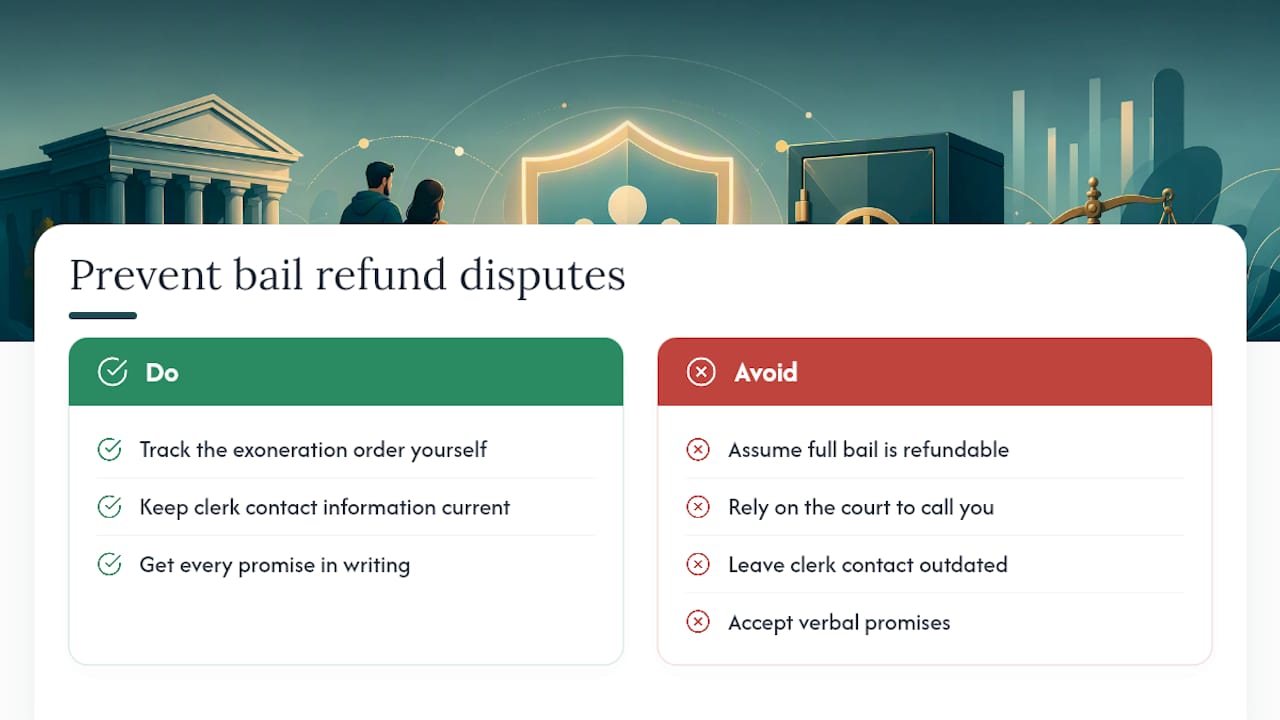
The fixes are boring but effective: track the exoneration order yourself instead of assuming the court will call you, keep your contact information current with the clerk, and get every promise in writing. The Bail Network trains agents to explain premium versus collateral clearly at the moment of signing, precisely because that clarity prevents most of the fights that happen three months later.
Where the Standard Advice on Bail Refunds Falls Short
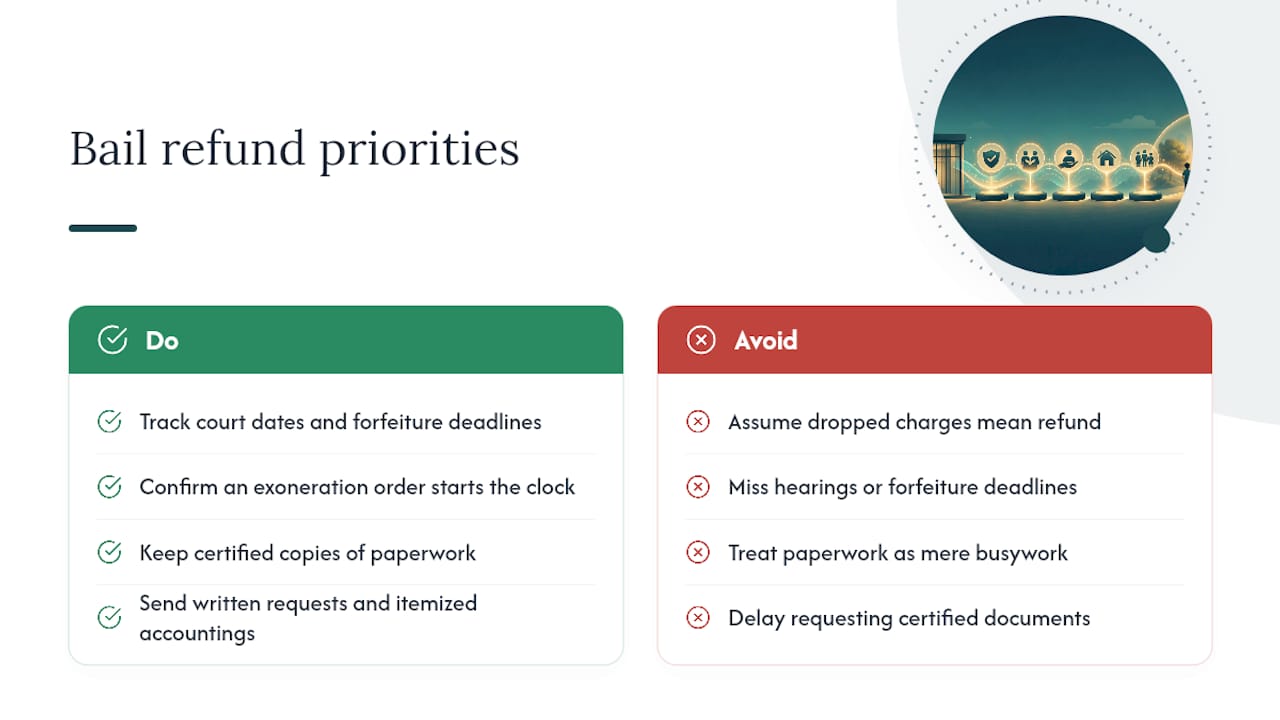
Most guides treat bail refunds as a simple binary: charges dropped, money returned. That framing sets people up for disappointment, because the real process runs through an administrative bottleneck almost nobody warns you about. The exoneration order, not the dismissal, is what actually starts the clock, and plenty of families spend weeks confused about why nothing has happened yet.
The bigger blind spot is forfeiture risk. People fixate on the outcome of the charges and forget that a single missed hearing earlier in the case can wipe out a refund regardless of how things end. If there’s one thing worth prioritizing above all else, it’s tracking court dates and forfeiture deadlines as aggressively as you track the case itself, because that timeline runs independently of whether the prosecutor eventually drops the charges. Paperwork discipline, certified copies, written requests, itemized accountings, isn’t busywork. It’s the difference between getting your money back in weeks versus chasing it for months.
— Jake
How The Bail Network Handles Posting, Paperwork, and Payoffs
Unlike agencies that disappear once bail is posted, The Bail Network stays involved through the parts that actually determine whether you see your money or collateral again. That means bilingual agents available 24/7, flexible payment plans starting as low as 1% with approved credit, and practical help tracking the paperwork trail from arrest through exoneration and collateral release.

Reaching out typically starts with a phone call: an agent locates the defendant, walks you through cash versus surety options for your specific bail amount, and explains exactly what happens to your money or collateral depending on how the case resolves. If you’re weighing your payment options or want a real answer about what a bond will cost before you commit, The Bail Network is available around the clock to walk through it with you.
Where to Verify Local Bail Refund Rules
Bail refund rules shift from state to state, so treat anything general, including this guide, as a starting point rather than the final word for your case.
- Check the Legal Information Institute at Cornell Law for plain-language explanations of dismissal types and their legal effects.
- Contact your local court clerk’s office directly for the exact refund forms, required documents, and mailing address your county uses.
Sources
- Dismissal without prejudice | Legal Information Institute (Cornell Law)
- What’s the difference between nolle prosequi and dismissal? | Nolo
- What Happens to Bond Money if Charges Are Dropped – Catalyst Legal
FAQ
What Happens to Bail if Charges Are Dropped?
Cash bail is typically refunded after the court formally exonerates the bond, minus any court costs, fines, or restitution owed. A bail bond premium paid to an agent is nonrefundable, though pledged collateral is usually released once the bond is exonerated.
How Do Bail Bonds Work if Charges Are Dropped?
The bail agent’s obligation to the court ends once the bond is exonerated, and any collateral you pledged, such as property or a vehicle title, should be released per your indemnity agreement. The premium you already paid the agent stays with them regardless of the outcome.
What Happens if You Can’t Get Bailed Out?
The defendant remains in custody until the case resolves, a bail amount is modified, or someone arranges payment through cash, collateral, or a bail agent’s payment plan. Contacting a licensed bail agent about financing options, including plans as low as 1% with approved credit through providers like The Bail Network, is often the fastest path to release.
How Long After Court Do You Get Your Bail Money Back?
Timing depends on your state’s rules, but expect any statutory hold period (some states require around 15 days after dismissal) plus standard clerk processing time afterward. Surety collateral releases usually take longer, since the bail agent’s own internal process runs on top of the court’s.
Can the Court Keep My Bail Money Even After Charges Are Dismissed?
Yes, if a forfeiture occurred earlier in the case, such as from a missed hearing, that forfeiture can stand even after a later dismissal unless it was vacated within the statutory window. Courts can also deduct outstanding fines, court costs, or restitution from a cash refund before releasing the balance.