
$50,000–$250,000? Gun Charge Bail for Families: Post It Fast
Bail for a gun charge ranges from a few hundred dollars for a minor misdemeanor to tens of thousands of dollars for a felony, with much higher amounts or outright detention possible for aggravated firearm felonies or federal cases. The exact number depends entirely on your county’s bail schedule, your criminal history, and whether prosecutors argue you’re a danger to the community. If you or a family member is sitting in jail right now, the first calls should go to a criminal defense attorney and a licensed bail agent, not to Google.
TL;DR:
- Bail amounts for gun charges vary widely, typically from a few hundred dollars for misdemeanors to over $50,000 or more for serious felonies, depending on local bail schedules.
- Factors such as the nature of the offense, evidence strength, criminal history, community ties, and danger to the public heavily influence the judge’s bail decision.
- Posting bail through cash, a surety bond, property, or on own recognizance depends on the defendant’s financial situation and the specific circumstances of the case.
- Release conditions often include firearm surrender, monitoring, travel restrictions, and no-contact orders, with violations risking bond revocation and re-incarceration.
- Responding promptly with legal and bail support, gathering documentation, and exploring payment plan options are critical to securing release efficiently.
Table of Contents
- How Much Is Bail for a Gun Charge, and Why Does It Vary So Much?
- What Factors Do Judges Weigh When Setting Gun Charge Bail Amounts?
- What Are Your Options for Posting Bail on a Firearm Offense?
- What Conditions Come With Gun Charge Release, and What Triggers Revocation?
- When Is Bail Denied Entirely for a Gun Charge?
- What Happens Between Arrest and the Bail Hearing?
- How Do Bail Bond Agents Actually Get Someone Released?
- Does Posting Bail Affect Sentencing or Plea Negotiations Later?
- How Does Juvenile Gun Charge Bail Differ From Adult Cases?
- How Do You Post Bail for a Gun Charge, Step by Step?
- What Are Your Options If You Can’t Afford Gun Charge Bail?
- Why the Standard Bail Advice Misses the Point
- How Thebailnetwork Helps When You Need to Move Fast
- Primary Sources and Bail Schedule References
- Sources
- FAQ
How Much Is Bail for a Gun Charge, and Why Does It Vary So Much?
Bail schedules do most of the heavy lifting on the initial number, but they’re only a starting point. A misdemeanor charge like carrying a concealed weapon without a permit often lands in the low thousands, sometimes a few hundred dollars in jurisdictions with lighter schedules. Felony firearm possession, especially with a prior conviction or a charge tied to another crime, commonly starts in the tens of thousands. Aggravated firearm felonies, drive-by allegations, or gun charges layered onto violent crimes frequently push bail into six figures, and in the most serious cases, judges skip a bail amount entirely and order detention.
Every county sets its own defaults. Siskiyou County’s 2026 bail schedule, for example, lists specific dollar figures for assault with a firearm and similar offenses, and that schedule also restricts judges from deviating below it for certain violent felonies before a hearing takes place. That’s one county in one state. Yours will look different.
- Misdemeanor firearm offenses: often several hundred to a few thousand dollars
- Standard felony possession: commonly $10,000 to $50,000
- Aggravated or violent firearm felonies: often $50,000 to $250,000, or no bail at all
LegalClarity’s breakdown of gun charge bail confirms this spread, noting that aggravated firearm felonies routinely exceed $100,000 in many jurisdictions. Because the number shifts county by county, call the jail or a bail agent to confirm the actual figure tied to the booking.
What Factors Do Judges Weigh When Setting Gun Charge Bail Amounts?
Judges aren’t picking numbers out of thin air. Under the framework in 18 U.S.C. § 3142, which state courts often mirror in spirit even when applying their own statutes, a handful of factors drive the decision:
- The nature and circumstances of the offense, including whether a gun was used, brandished, or just possessed
- The weight of the evidence against the defendant
- Ties to the community, such as employment, family, and how long someone has lived locally
- Criminal history, including prior failures to appear in court
- Whether the person poses a danger to a specific victim or the public generally
Pretrial services officers usually interview defendants before the bail hearing and compile a report on employment, housing stability, and family responsibilities. That report often shapes the judge’s initial leaning more than anything the defense attorney says out loud. Prosecutors, for their part, will highlight any weapon enhancement, gang allegation, or prior conviction to argue for a higher figure.
Pro Tip: Have a family member gather proof of employment, a lease or mortgage statement, and letters confirming caregiving duties before the hearing. Pretrial services reports carry real weight, and documented stability can shave thousands off a proposed number.
What Are Your Options for Posting Bail on a Firearm Offense?
You generally have four paths to get someone out of custody, and speed varies a lot between them.
- Cash bail. Paying the full amount in cash gets the fastest release and the money is returned (minus court fees) once the case resolves, assuming all court dates are met.
- Surety bond. A licensed bail agent posts the full amount in exchange for a premium, typically around 10% depending on the state, per LegalClarity’s rate data. Some agents offer structured payment plans instead of demanding the premium up front.
- Property bond. Real estate can secure release instead of cash, but courts have to verify the property’s value and clear title first, which routinely adds days the family doesn’t have.
- Release on own recognizance (OR). A judge releases the defendant on a promise to appear, with no money exchanged. This is far less common for gun charges, particularly felonies, unless ties to the community are exceptionally strong.
Pro Tip: If cash is tight, ask the bail agent directly about payment plan options before signing anything. Reputable agents will walk you through collateral requirements and co-signer obligations without pressure.
What Conditions Come With Gun Charge Release, and What Triggers Revocation?
Release on a firearm charge almost never comes without strings attached. Expect some combination of the following:
- Mandatory surrender of any firearms, including ones not tied to the charge
- Electronic monitoring or check-ins with a pretrial supervision officer
- Travel restrictions, sometimes limited to the county or state
- No-contact orders with alleged victims or witnesses
- Regular court appearances with strict attendance requirements
Violating any of these can trigger bond revocation, landing the defendant back in custody and forfeiting collateral or the bond premium already paid. A missed check-in or an unreported address change is often enough. Document every compliance step and tell your attorney or bail agent immediately about any change in circumstances, since a proactive call is almost always better than an unexplained gap.
When Is Bail Denied Entirely for a Gun Charge?
Federal law creates a presumption of detention for certain offenses involving a firearm used in connection with a drug trafficking crime or a violent felony, meaning the burden shifts to the defendant to prove release is safe. In most other federal and state cases, the government has to justify why no combination of conditions would protect the public.
“We conclude that no condition or combination of conditions will reasonably assure the safety of the community,” a federal court found in ordering detention after weighing the danger and flight-risk factors laid out in 18 U.S.C. § 3142.
State courts apply similar logic. A violent felony label, a history of missed court dates, or a strong prosecutorial danger argument can all push a judge toward denial rather than a high number.
What Happens Between Arrest and the Bail Hearing?
The clock starts the moment handcuffs go on, and most jurisdictions require a first appearance within 48 to 72 hours of arrest.
- Booking. Fingerprints, photographs, and an initial records check happen at the jail, often within hours of arrest.
- First appearance or arraignment. A judge reads the charges, and in many counties, this is also when bail gets set, either at the schedule amount or after argument from both sides.
- Bail-setting hearing (if separate). For more serious felonies, some jurisdictions hold a dedicated hearing with pretrial services input before setting or denying bail.
- Preparation. Bring or have family bring proof of ties to the community, employment records, and identification. Contact a defense attorney immediately and call a bail agent to confirm the exact figure once it’s set, since processing times after a bond is posted vary by facility.
How Do Bail Bond Agents Actually Get Someone Released?
A licensed bail agent’s job starts with locating the defendant in the system, confirming the exact bail amount with the jail, and then posting the bond paperwork with the court or facility. That paperwork includes the bond agreement, identification for the person paying, and any collateral documentation if the premium isn’t paid entirely in cash.
Licensed bail agents work this process around the clock, with bilingual agents available 24/7 so language isn’t a barrier during an already stressful call. A reputable agent should explain every fee in writing, walk through collateral terms before anyone signs, and stay reachable if a question comes up mid-process.
- Confirm the booking number and exact bail amount with the facility first
- Review the full bond contract, including premium and collateral terms, before signing
- Ask about payment plan structure and what happens if a payment is missed
Pro Tip: Ask any agent for their license number before paying anything. A legitimate bail agent will provide it without hesitation.
Does Posting Bail Affect Sentencing or Plea Negotiations Later?
Bail status itself isn’t a legal factor in sentencing guidelines, but it shapes the case in ways that matter more than most defendants expect. Someone released on bail can keep working, stay with family, and show up to court hearings looking stable and prepared, which often reads well to a judge weighing a plea deal. Someone held in custody, by contrast, faces pressure to accept whatever plea gets offered first, simply to end pretrial detention faster.
Prosecutors know this dynamic. A defendant sitting in jail for months awaiting trial has less leverage to negotiate and less time to build a defense with an attorney in person. Being out on bail means more meetings with counsel, more opportunity to gather character letters and employment verification, and more chances to complete programs like anger management or firearm safety courses voluntarily, all of which defense attorneys frequently use to argue for reduced charges or a lighter sentence.
There’s a flip side. Strict compliance with release conditions, no missed court dates, no new arrests, no violations of a no-contact order, tends to strengthen a defendant’s position at sentencing even after a conviction. Judges notice a clean pretrial record. Conversely, a bond revocation or a failure to appear becomes a permanent mark on the file that prosecutors will raise during plea talks, often as leverage to push for harsher terms.
Bottom line: bail isn’t just about staying out of a cell. It’s the difference between negotiating a case from a position of stability or from a jail cell with a shrinking set of options.
How Does Juvenile Gun Charge Bail Differ From Adult Cases?
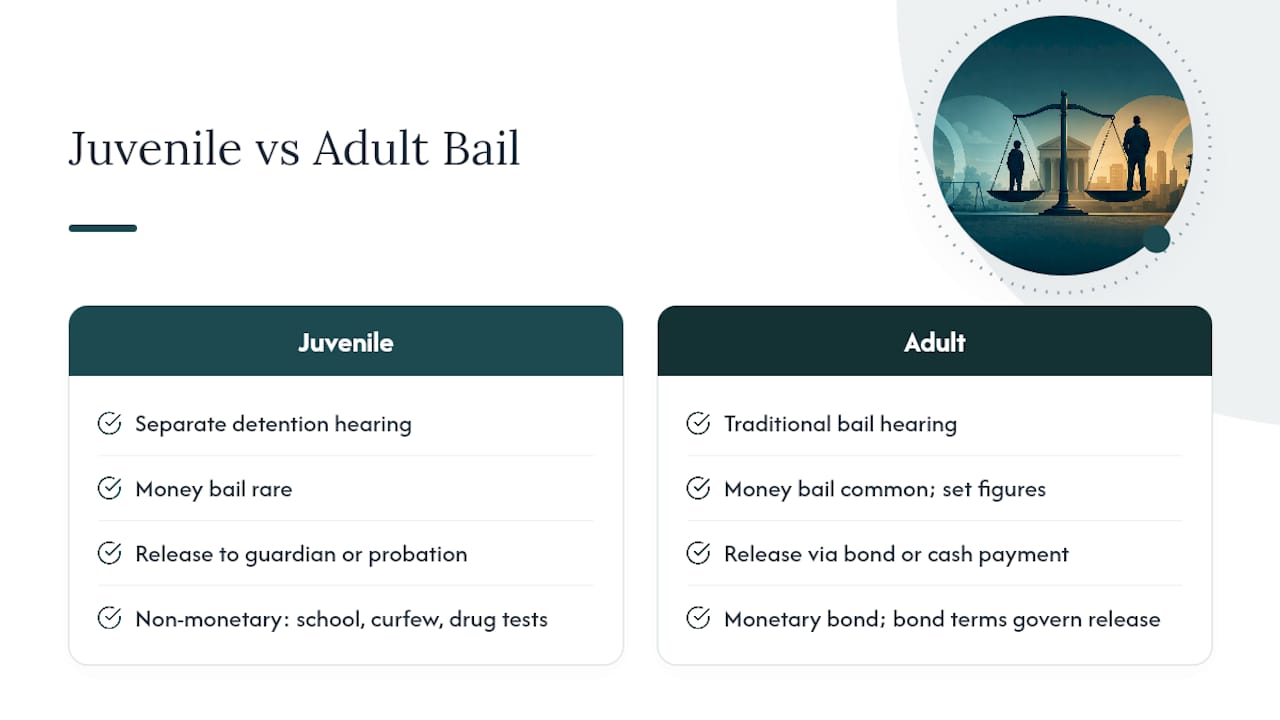
Juvenile cases run through an entirely separate system, and the word “bail” often doesn’t apply the same way. Most states use a detention hearing instead of a traditional bail hearing, where a judge decides whether to release the minor to a parent or guardian, place them under supervised probation conditions, or hold them in a juvenile detention facility pending further proceedings.
Money bail is rare in the juvenile system. Instead of a cash figure, courts typically set non-monetary conditions: mandatory school attendance, curfews, drug testing, or requirements to stay with a specific guardian. Some states allow bail for juveniles charged with serious gun offenses when the case is being considered for transfer to adult court, and in those instances, the amounts can approach adult felony ranges, particularly for firearm charges tied to violent allegations.
Adult cases, by contrast, almost always involve a set bail figure from a published schedule, with a clear path to a bond or cash payment for release. Adults also carry the option of hiring a bail agent, which typically isn’t available in juvenile matters since the system leans toward guardian custody rather than a financial bond.
One more difference: juvenile records and detention decisions are usually sealed from public view, while adult bail hearings and bond amounts are part of the public court record, which is part of why the two processes read so differently to families encountering them for the first time. If a minor is facing a gun charge serious enough to trigger a transfer hearing, a defense attorney experienced in both systems becomes essential fast.
How Do You Post Bail for a Gun Charge, Step by Step?
Once bail is set, the actual process of getting someone out moves faster than most families expect, provided the paperwork is ready.
Step one: confirm the amount and location. Call the jail or check with the court clerk to verify the exact bail figure and which facility is holding the defendant. Amounts occasionally shift between booking and the first hearing.
Step two: choose a payment method. Decide between full cash payment, a surety bond through a licensed agent, or a property bond, weighing which one the family can realistically afford and how fast release needs to happen.
Step three: contact a bail agent if using a bond. The agent verifies the booking, prepares the bond paperwork, and explains the premium and any collateral requirements before anyone signs.
Step four: complete the paperwork. This includes identification for the person paying (the indemnitor), the bond agreement itself, and collateral documents if applicable. Co-signers should read every clause since they become financially responsible if the defendant skips court.
Step five: wait for processing. Release times depend on the facility’s workload, sometimes a couple of hours, sometimes most of a day, even after the bond is posted correctly.
Step six: confirm release conditions. Before anyone leaves the facility, make sure everyone understands the no-contact orders, firearm surrender requirements, or monitoring conditions attached to release.
What Are Your Options If You Can’t Afford Gun Charge Bail?
Being unable to pay bail doesn’t mean sitting in jail is the only option, and it doesn’t mean giving up rights either.
Every defendant has the right to request a bail reduction hearing, where a defense attorney can argue for a lower amount based on financial hardship, strong community ties, or a clean record. Courts are required to consider ability to pay in many jurisdictions, and a well-documented hardship argument, proof of income, dependents, or a stable address, sometimes moves the number significantly.
Public defenders are available for anyone who can’t afford private counsel, and requesting one at the first appearance costs nothing and starts the clock on legal representation immediately. Some counties and nonprofit organizations also run bail funds for qualifying cases, though availability varies enormously and firearm charges are sometimes excluded depending on the fund’s criteria.
A surety bond remains the most common route for families short on cash, since the premium, often around 10% of the total bail, is far less than paying the full amount outright. Structured payment plans through a licensed agent can spread that premium into manageable installments rather than requiring it all up front.
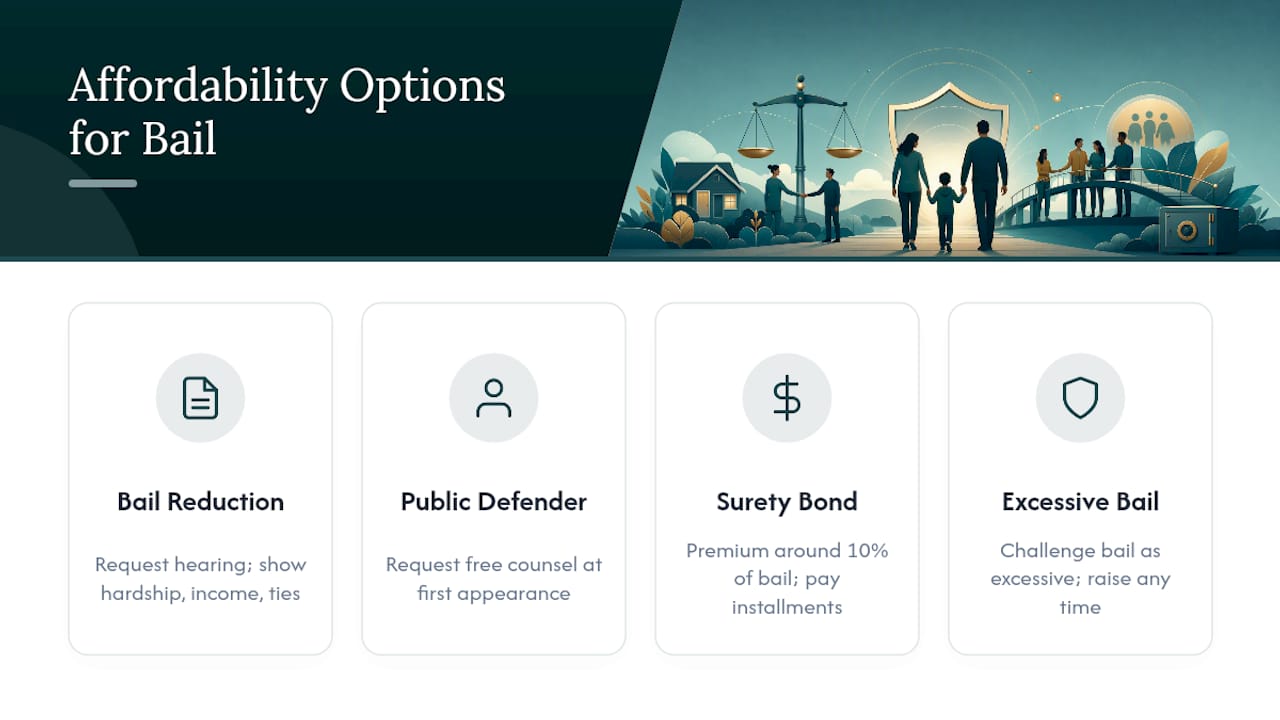
Finally, defendants always retain the right to challenge an excessive bail amount as a constitutional matter, arguing it amounts to preventive detention disguised as a financial condition. An attorney can raise this at any stage, not just the initial hearing, if new evidence about stability or reduced risk emerges later in the case.
Why the Standard Bail Advice Misses the Point
Most guides treat gun charge bail like a lookup table: enter the charge, get a number. That’s not how it works, and pretending otherwise sets families up for a bad surprise at the jail window. The real variable isn’t the charge category, it’s the county. Two people with nearly identical possession charges can face wildly different numbers depending on whether their county schedule runs conservative or aggressive, and whether the judge on duty that day tends to follow the schedule or override it.
The advice that actually holds up: stop searching for a universal number and start gathering documentation before the hearing even happens. Employment records, a stable address, a family member willing to show up in court, these move numbers more than most people realize, and pretrial services reports weigh them heavily. Conventional wisdom underrates preparation and overrates the schedule itself as destiny.
If there’s one thing families should prioritize first, it’s speed paired with informed decisions, not speed alone. Call an attorney, then a licensed bail agent, and ask direct questions about premiums, collateral, and payment plans before signing anything.
— Jake
How Thebailnetwork Helps When You Need to Move Fast
A licensed bail network is built for exactly this moment: a family member in custody, a bail number on the board, and no time to shop around. Bilingual agents are available 24/7, so a language barrier never becomes the reason release gets delayed.
Beyond posting the bond itself, licensed bail agents often provide inmate-locator support to help families confirm exactly where a loved one is being held and what the current bail figure looks like, cutting out hours of frustrating phone calls to the jail directly. Whatever agent a family chooses, licensed and transparent about contract terms is non-negotiable, read every line before signing. To see exactly how payment plans and fees work, or to reach an agent right now, visit Thebailnetwork and get a bond moving today.
Primary Sources and Bail Schedule References
For exact rules, consult 18 U.S.C. § 3142 case filings, a county bail schedule for local amounts, and AP News coverage of real firearm-case bail figures.
This article is general information, not a substitute for advice from a qualified lawyer. Consult a qualified legal professional about your own circumstances before acting on anything here.
Sources
- United States v. Chew (district court filing) — example application of 18 U.S.C. § 3142
- How Much Is Bail for a Gun Charge? Factors & Options - LegalClarity
- Local felony & misdemeanor bail schedules for 2026 — Siskiyou County
- AP News — bail set at $20,000 in a high-profile firearm-related case
FAQ
How Much Would Bail Be for a Gun Charge?
Bail typically runs a few hundred to a few thousand dollars for misdemeanor firearm offenses, tens of thousands for standard felonies, and $50,000 to $250,000 or higher for aggravated firearm felonies, though the exact figure depends on your county’s bail schedule.
How Many Years Is a Gun Charge in Florida?
Sentencing length depends heavily on the specific charge, prior record, and whether a mandatory minimum applies; this varies too much to state a single figure, and an attorney licensed in Florida can give an accurate range for a specific case.
How Do You Fight a Gun Charge in Pennsylvania?
Common defense strategies include challenging the legality of the search or stop, disputing possession or knowledge of the firearm, and questioning whether the weapon met the statutory definition triggering the charge, though outcomes depend on the specific facts and require a licensed Pennsylvania attorney.
How Much Time Do You Get for a Gun Charge in New York?
Potential sentences vary widely based on the specific statute charged, criminal history, and whether the firearm was used in another offense, so there’s no single applicable number without reviewing the actual charging documents with an attorney.
Can a Bail Agent Help if I’m Short on Cash?
Yes. A licensed agent can post a surety bond for a percentage of the total bail, and some, including Thebailnetwork, offer structured payment plans instead of requiring the full premium up front.