
Post Bail From Another State Fast: Family Playbook for Cosigners
Yes, most jails and courts accept an out-of-state cosigner on a bail bond. The catch: only a bail agent licensed in the state where the arrest happened can actually post that bond, which means your paperwork gets routed through a local agent even while you sign from home. Expect tighter underwriting, extra documents, and sometimes a transfer fee on top of the premium.
TL;DR:
- Out-of-state cosigners face stricter scrutiny and often need to provide additional documentation such as proof of income, residence, and collateral, due to verification difficulties.
- The physical posting of the bond requires a licensed local agent in the arrest state, creating a two-step process involving remote coordination and in-person bond delivery.
- Expect tighter underwriting, higher collateral requirements, and additional transfer fees, especially when the cosigner is distant from the defendant.
- Speed of posting depends largely on how organized the cosigner is, including having all documents ready before contacting a bail agency and verifying licensing details upfront.
- A thorough understanding of indemnity agreements and fee disclosures is essential, as cosigners are liable for the full bond amount and recovery costs if the defendant skips court.
Table of Contents
- How the Out-of-State Cosign Process Actually Works
- What Agents Typically Require From an Out-of-State Cosigner
- Step-by-Step: How to Cosign From Another State Fast
- What You’re Actually Agreeing to When You Sign
- What It Costs and How Long It Takes
- Questions to Ask the Bondsman Before You Sign
- Why This Process Works Better Than People Expect
- How Thebailnetwork Helps You Cosign From Anywhere
- Where to Verify the Legal Details Yourself
- Sources
How the Out-of-State Cosign Process Actually Works
Two people usually handle your case, not one. A home-state coordinator, often a licensed agent working with a national network, walks you through paperwork, collects payment, and sends documents for electronic signature. A separate posting agent, licensed in the arrest state, physically carries the bond and the surety’s power of attorney to the jail or courthouse.
That split exists because of licensing law, not convenience. A bondsman licensed in Ohio simply can’t post a bond in Arizona. State insurance and bail licensing rules tie the authority to post to the jurisdiction, so out-of-state bail arrangements almost always involve this handoff between a coordinator and a licensed local agent.
The typical sequence looks like this:
- You contact a bail company and provide booking details.
- The coordinator verifies your identity and the defendant’s charges.
- You sign the indemnity agreement and pay the premium remotely.
- A licensed posting agent in the arrest state delivers the bond to the jail.
- The jail processes release once the bond is accepted.
Most of this moves fast, often within an hour or two once documents and payment clear. The physical posting step is the one part you can’t rush from another state.
What Agents Typically Require From an Out-of-State Cosigner
Remote cosigners get scrutinized harder than local ones, mainly because agents can’t easily verify your community ties. Expect to provide:
- A valid government ID (driver’s license or passport).
- Proof of current address, like a lease or utility bill.
- Recent paystubs or an employment verification letter.
- Tax documents or bank statements showing financial stability.
- Consent for a credit check in many cases.
Agents may also ask for collateral, sometimes at a higher value than they’d request from a local cosigner. Vehicle titles, real estate equity, or savings accounts are common. The reasoning is straightforward: a distant cosigner is harder to track down if something goes wrong, so electronic bail arrangements often come with stricter underwriting than an in-person signing would.
Your relationship to the defendant matters more than people expect. Agents generally favor parents, spouses, or adult children over friends or distant relatives, since closer family ties are read as a stronger guarantee the defendant will show up in court.
Pro Tip: Gather your pay stubs, ID, and a recent utility bill before you even call an agent. Having them ready can shave real time off the underwriting process.
Step-by-Step: How to Cosign From Another State Fast
Speed here depends almost entirely on how organized you are before you make the first call.
- Collect the full booking picture. Get the defendant’s full name, date of birth, the jail’s name, the charges, the bond amount, and the court or docket number if available.
- Pick your coordination path. Decide whether to work through a national bail company that will assign a local posting agent, or contact a licensed agent in the arrest state directly. Either way, ask for the agent’s license number before sharing any payment information.
- Sign the indemnity agreement. Most companies handle this through secure e-signature platforms now, so you never need to be in the same room, let alone the same state, as the agent.
- Arrange the premium payment. Confirm the accepted method and get a receipt or confirmation number.
- Get everything in writing. Ask for confirmation that the bond has posted and a realistic release window.
Before you sign anything, build in a few safeguards:
- Request written fee disclosures, not verbal promises.
- Set an explicit cap on collateral exposure.
- Confirm exactly how you’ll be notified about court dates or a missed appearance.
For more on how those court date obligations actually play out for the cosigner, see how court dates affect a bail bond.
What You’re Actually Agreeing to When You Sign
Signing an indemnity agreement is not a formality. It’s a binding financial commitment, and it deserves to be read as one before you put your name on it. Sample indemnity forms used across the industry make the indemnitor, that’s you, responsible for ensuring the defendant appears in court, and liable for the full bond amount plus recovery and extradition costs if the defendant skips town.
That language comes straight from a standard bail indemnity form, and most agencies use nearly identical clauses. A few things to know before you sign:
- “Joint and several liability” means the surety can pursue you for the entire amount, not just a portion, even if someone else also cosigned.
- You’re typically authorizing the agent to take recovery action if the defendant disappears.
- Collateral you pledge can be forfeited if the bond is forfeited.
To limit exposure, insist on a written fee disclosure, set a firm collateral cap in the agreement itself, and keep copies of every document you sign. Read up on what a cosigner’s role actually involves before agreeing to anything.
What It Costs and How Long It Takes
The exact percentage and fees can vary depending on the state and circumstances.
Payment usually happens by wire transfer, credit card, or cashier’s check, and how fast that payment clears often determines how fast the bond gets posted. Once the posting agent delivers the bond and the jail accepts it, release can still take anywhere from a couple of hours to a full day, depending on the facility’s staffing and processing backlog. Weekend and holiday postings tend to run slower no matter how quickly you paid.
Questions to Ask the Bondsman Before You Sign
A few pointed questions upfront can save you from a bad surprise later.
- Ask for the posting agent’s license number and confirm they’re authorized to operate in the arrest state.
- Get a written fee disclosure and payment schedule, not a verbal quote.
- Ask exactly what triggers forfeiture and how any pledged collateral would be handled.
- Confirm how and when you’ll be notified of court dates, and who handles recovery locally if the defendant misses one.
Pro Tip: Ask the agent to email you their license number and the surety company name before you send a dollar. A legitimate agent will hand this over without hesitation.
If you want to understand what happens on the other end of a missed payment or forfeiture, bond revocation in California walks through the consequences in plain terms.
Why This Process Works Better Than People Expect
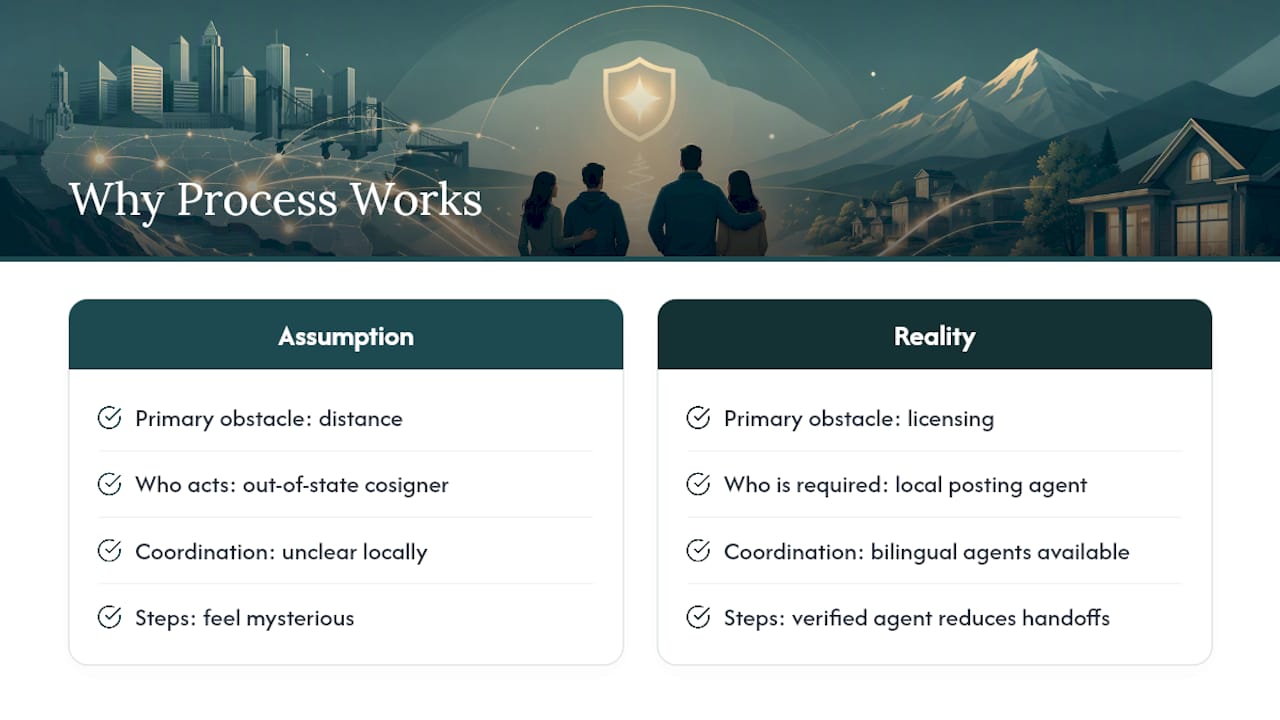
Families assume distance is the obstacle. It rarely is. The real friction point is licensing, not geography, and once you understand that a local posting agent has to be involved no matter what, the rest of the process stops feeling mysterious. Bilingual agents are often available to coordinate this kind of remote posting, handling document signing and verification so an out-of-state cosigner isn’t left guessing about next steps.
Part of our job is verifying the posting agent on the ground, cutting down unnecessary handoffs, and putting fee disclosures in writing so you know exactly what you’re signing.
— Jake
How Thebailnetwork Helps You Cosign From Anywhere
Coordinating a bail bond from another state doesn’t have to mean chasing down a local agent on your own or hoping the paperwork gets handled correctly. Bilingual teams may work this exact scenario daily, matching you with a licensed posting agent in the arrest state while you sign documents and arrange payment remotely.
Call Thebailnetwork or fill out the online contact form, and have the defendant’s booking information, charges, and bond amount ready when you reach out. We’ll walk you through the payment options available and coordinate the posting agent so your loved one gets released without unnecessary delays.
Where to Verify the Legal Details Yourself
Reading the actual documents beats taking anyone’s word for it. These are worth a look before you sign anything:
- Lexington National’s sample indemnity agreement, showing standard liability clauses.
- Colorado’s statute on indemnity agreements and disclosures, an example of state-level cosigner protections.
- A practical guide to posting bail out of state for real-world pitfalls to avoid.
This article is general information, not a substitute for advice from a qualified lawyer. Consult a qualified legal professional about your own circumstances before acting on anything here.
Sources
- Lexington National — Bail Standard Form No. 2 (sample indemnity agreement)
- Colorado statute — indemnity agreement and disclosure requirements for bail producers
- LegalClarity — Who does out-of-state bail bonds and how they work
- Counsilient — Remote bail bonds explained
- Express Bail Bonds — Posting bail out of state: a how-to guide